Eliminating Trip Hazards and Uneven Sections
Concrete Sidewalk Repair in Mount Juliet and surrounding areas for walkways showing settlement, cracking, or surface damage that creates safety concerns
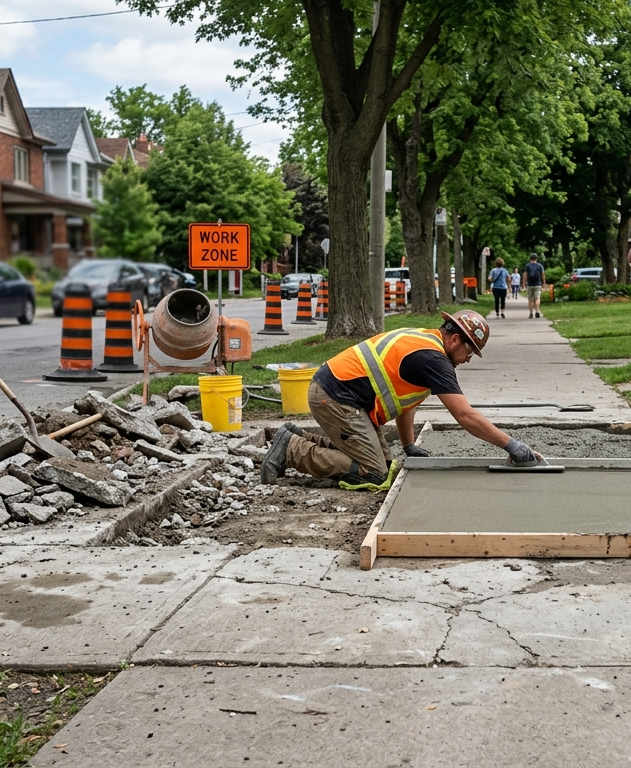
Uneven sidewalk sections develop when soil beneath the concrete settles unevenly, tree roots push sections upward, or erosion washes away base material creating voids under the walkway. Concrete Results repairs sidewalks in Mount Juliet, Franklin, Hendersonville, and neighboring communities by addressing both the visible damage and the underlying cause—fixing surface cracks without correcting settlement or root intrusion leads to recurring problems. Trip hazards form where adjacent sections develop height differences of half an inch or more, creating liability concerns and accessibility barriers for residential and commercial properties.
Repair methods depend on damage type and extent—isolated cracks get cleaned and filled with flexible sealant, settled sections may be lifted through slabjacking or mudjacking to restore level surfaces, and sections with extensive damage require removal and replacement. Root intrusion sometimes requires cutting back invasive growth and installing root barriers before concrete work begins. Surface repairs restore smooth walking surfaces and eliminate edges where sections meet unevenly.
Schedule a sidewalk assessment to identify damage patterns and review repair approaches that restore safe walkways.
What Repairs Accomplish for Safety and Appearance
Evaluating damage before recommending solutions ensures repairs address why problems developed rather than temporarily masking symptoms that will reappear. Long-lasting repair methods restore structural integrity and level surfaces while preventing water infiltration that accelerates concrete deterioration through freeze-thaw cycles. Quality workmanship means repaired sections blend with existing concrete and maintain consistent walking surfaces without abrupt transitions.
Once repairs cure, the sidewalk provides a continuous level surface without raised edges that catch shoes or create obstacles for wheelchairs and strollers. Water drains properly rather than pooling in settled low spots where ice forms during winter months. The repaired walkway remains stable under foot traffic without flexing or rocking that indicates ongoing settlement underneath. Sealed cracks stop allowing moisture penetration that causes progressive deterioration through seasonal temperature changes.
Residential and commercial applications both benefit from sidewalk repair that restores safe passage and improves property appearance, though commercial properties face additional liability concerns when public walkways develop trip hazards. Some damage patterns indicate replacement provides better value than repair—widespread cracking across multiple sections or severe settlement throughout the walkway length often means base failure that repair alone won't permanently resolve.
Answers to Frequent Service Questions
Property owners need to understand repair options and when sidewalk sections require replacement rather than surface treatment.
What causes sidewalk sections to settle and become uneven?
Settlement happens when base material beneath the concrete compresses, erodes, or washes away through poor drainage, leaving voids that allow the slab to drop, and the problem worsens over time as water infiltration continues removing support material from under the walkway.
How does slabjacking restore level sidewalk surfaces?
Slabjacking pumps material—typically a cement-based slurry or polyurethane foam—through holes drilled in the settled concrete, filling voids beneath the slab and lifting it back to original grade, which works effectively when concrete remains structurally sound but has dropped due to base loss.
Why should sidewalk cracks be repaired even when sections remain level?
Cracks allow water to penetrate beneath the concrete where it saturates base material and causes settlement, and during Mount Juliet winters the water freezes and expands, widening cracks and accelerating deterioration that eventually requires section replacement instead of simple crack filling.
When does tree root damage require section replacement?
Extensive root intrusion that lifts concrete significantly or causes multiple crack patterns across a section typically means removal and replacement provides more reliable long-term results than attempting to grind down raised areas while roots continue growing and pushing upward beneath the walkway.
What determines whether repair or replacement makes better financial sense?
Isolated damage in otherwise sound sidewalks responds well to repair, but when multiple sections show settlement, widespread cracking appears, or underlying base failure affects the entire walkway, replacement costs spread over the longer service life often provide better value than ongoing repair expenses.
Concrete Results inspects sidewalk damage to identify root causes and recommend solutions that restore safe, functional walkways rather than applying temporary fixes to ongoing structural problems. Call (615) 517-2300 to arrange an inspection and receive an estimate for sidewalk repairs that address both visible damage and underlying issues.